Gold filled, gold plated, and gold vermeil jewelry can look similar in a product photograph, but they are not the same product. Their base metals, gold-layer application methods, material costs, design possibilities, durability expectations, labeling requirements, and production risks are different. For a Jewelry Brand, importer, distributor, or B2B Jewelry Wholesaler, choosing the wrong construction can create pricing errors, customer complaints, compliance problems, and inconsistent repeat orders.
This guide explains the differences from a manufacturing and sourcing perspective. It is designed for buyers comparing Vietnam Jewelry manufacturers, Chinese Jewelry Manufacturers, Jewelry Suppliers, Jewelry wholesalers, and Factory Direct Jewelry Suppliers for OEM Jewelry, ODM Jewelry, Custom Jewelry, and private-label Jewelry Production.
JINYI Jewelry (www.jyjew.com) has more than two decades of Jewelry Expertise. Headquartered in Panyu, Guangzhou, the company operates large manufacturing facilities in Thanh Hoa, Vietnam, specializing in medium- to high-quality Brass Jewelry, 925 Sterling Silver Jewelry, and special-order K-gold jewelry. Premium Stainless Steel Jewelry, zinc, and alloy products are managed in separate units. This multi-material and cross-border experience helps buyers select a construction that matches their design, target price, intended use, and destination market.
Quick Comparison: Gold Filled, Gold Plated, and Gold Vermeil
Product Type | Typical Base | How Gold Is Applied | Main B2B Advantage | Important Limitation |
Gold filled | Usually brass or another specified core | A relatively thick gold-alloy layer is mechanically bonded to the core material | High perceived value and strong wear potential when correctly made | Less suitable for some complex cast shapes; terminology and marking must be accurate |
Gold plated | Brass, silver, stainless steel, zinc, alloy, or another suitable base | A thin gold layer is deposited by electroplating or another coating system | Flexible design options and competitive Factory Price Jewelry | Performance depends heavily on preparation, thickness, coating system, and use |
Gold vermeil | Sterling silver | Gold or gold alloy is plated over a sterling silver base | Precious-metal story with a lower price than solid gold | Must meet applicable market definitions; plating still wears over time |
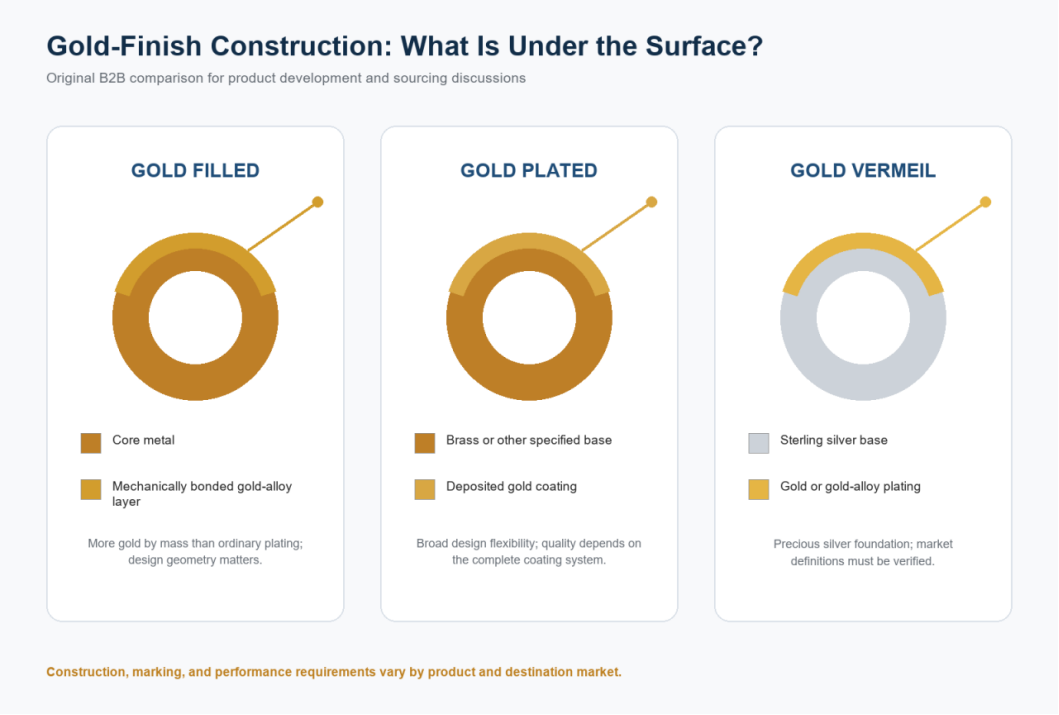
There is no universally “best” option. The best construction is the one that meets the product brief and is described honestly to the customer.
What Is Gold Plated Jewelry ?
Gold Plated Jewelry is made by applying a gold or gold-alloy coating over a base material. Common bases include brass, 925 silver, stainless steel, zinc, and alloy. The manufacturing route may include cleaning, polishing, activation, barrier layers, electroplating, color plating, and a protective topcoat. Every stage affects adhesion, color consistency, corrosion resistance, and the way the product ages.
A skilled Brass Jewelry Manufacturer can produce cast or fabricated shapes, polish the surface, control porosity, and prepare the metal for plating. Brass supports detailed Men’s Jewelry, Women’s Jewelry, earrings, pendants, cuffs, Everyday Jewelry, and fashion-led statement designs. Fashion Jewelry Manufacturers also use zinc or other alloys for larger shapes and price-sensitive collections.
Gold plating is not one fixed quality level. A low-cost flash coating and a carefully engineered multi-layer plating system are both called “gold plated,” even though their cost and expected performance may differ significantly. Buyers should specify:
· Base metal and metal composition
· Gold karat and target color
· Plating thickness or coating specification
· Nickel-free or nickel-release requirements
· Barrier and protective layers
· E-coating or anti-tarnish requirements
· Wear, sweat, salt-spray, adhesion, and chemical tests
· Intended use and destination market
PVD Plating is often discussed alongside conventional plating. PVD is especially common for Stainless Steel Jewelry because it can provide durable decorative finishes when the substrate, process, and testing are appropriate. However, PVD Plating is not automatically identical to electroplated gold, gold filled material, or vermeil. The technical specification must identify what is being supplied.
What Is Gold Vermeil?
Gold filled jewelry is not produced by applying a very thin decorative coating. It uses a gold-alloy layer mechanically bonded to a core material, commonly brass. In U.S. trade guidance, an unqualified gold-filled description is commonly associated with a gold-alloy layer representing at least one-twentieth of the item’s metal weight, with the gold fineness and ratio disclosed in the marking. Buyers should verify the exact labeling rules for the country where the product will be sold.
Because gold filled material is constructed differently, it affects product engineering. It is frequently used for wire, chain, sheet, tubing, findings, and shapes that can be formed from bonded stock. It may not be the best route for every highly detailed casting, deep engraving, heavy polishing process, or design that exposes the base at cut edges.
Buyers searching for gold filled jewelry manufacturers in Vietnam should ask whether the supplier actually manufactures with bonded gold-filled stock, buys certified material from an approved source, or is simply offering conventional gold plating. These are different products and should not share the same quotation or description.
JINYI’s stated core capabilities include brass jewelry, 925 silver jewelry, Stainless Steel Jewelry, zinc and alloy products, plus K-gold jewelry for special orders. A gold-filled project should therefore be reviewed technically before any capability, price, or delivery commitment is made. Honest feasibility review is more valuable than a supplier claiming it can make every construction.
Gold Filled vs Gold Vermeil vs Gold Plated: Which Lasts Longer?
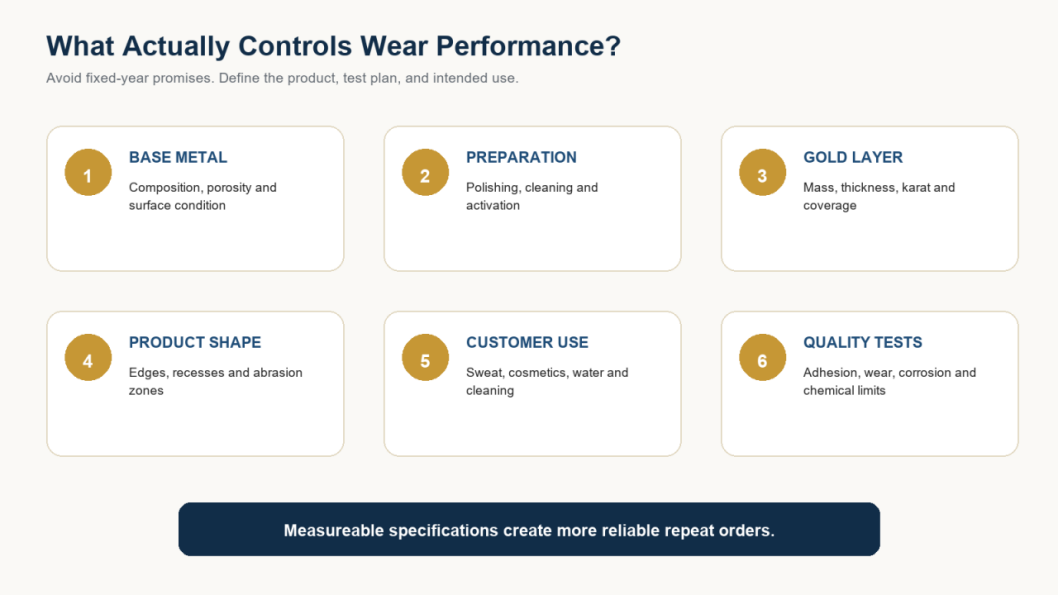
It is tempting to promise a fixed number of years, but wear life cannot be guaranteed by product category alone. Durability depends on gold-layer mass or thickness, base material, surface preparation, porosity, plating chemistry, topcoat, product shape, skin chemistry, cosmetics, sweat, cleaning methods, storage, and frequency of use.
In general, correctly made gold filled material contains substantially more gold than ordinary fashion plating and may provide stronger wear performance. Gold vermeil can offer a meaningful plated layer over sterling silver when produced to the relevant standard. Gold plated jewelry can range from promotional quality to premium, test-controlled quality.
For Best Jewelry for Everyday or other Everyday Jewelry programs, buyers should define actual performance tests rather than use vague terms such as “waterproof,” “tarnish-free,” or Hypoallergenic Jewelry without evidence. A ring normally receives more abrasion than an earring. Gold Pinky Rings, a Gold Heart Ring, Chunky Ring Gold Jewelry, Gold Nugget Rings, and Rose Gold Engagement Rings all have different wear zones and should be engineered accordingly.
Manufacturing and Design Differences
Gold plated and vermeil products offer broad design flexibility because they can be cast, formed, soldered, stone-set, polished, and then plated. This makes them suitable for detailed motifs, Personalized Jewelry, textured surfaces, and a wide range of order quantities.
Gold filled material requires design decisions that protect the bonded gold layer. Excessive grinding, cutting, soldering, or polishing can reveal the core. Product architecture, exposed edges, joints, and findings must be planned from the beginning.
Solid gold is a separate category. A Gold Jewelry Manufacturer or Gold Jewelry Factory may cast and finish a 10k Gold Ring, 18k Gold Ring, Wholesale Gold Jewelry, Gold and Rose Gold Engagement Rings, Gold and White Gold Engagement Rings, or a Proposal Ring Rose Gold design. Gold Castings require metal accounting, karat control, alloy color management, weight tolerance, secure handling, and specialized pricing. A gold-plated product should never be represented as solid gold, and a solid-gold quotation should never be compared directly with Factory Price Jewelry made from brass or silver.
CNC Jewelry processes can support precision components, geometric Men’s Jewelry, stainless steel rings, clasps, and repeatable details. The right process depends on the metal, shape, tolerance, finish, and volume rather than on a keyword alone.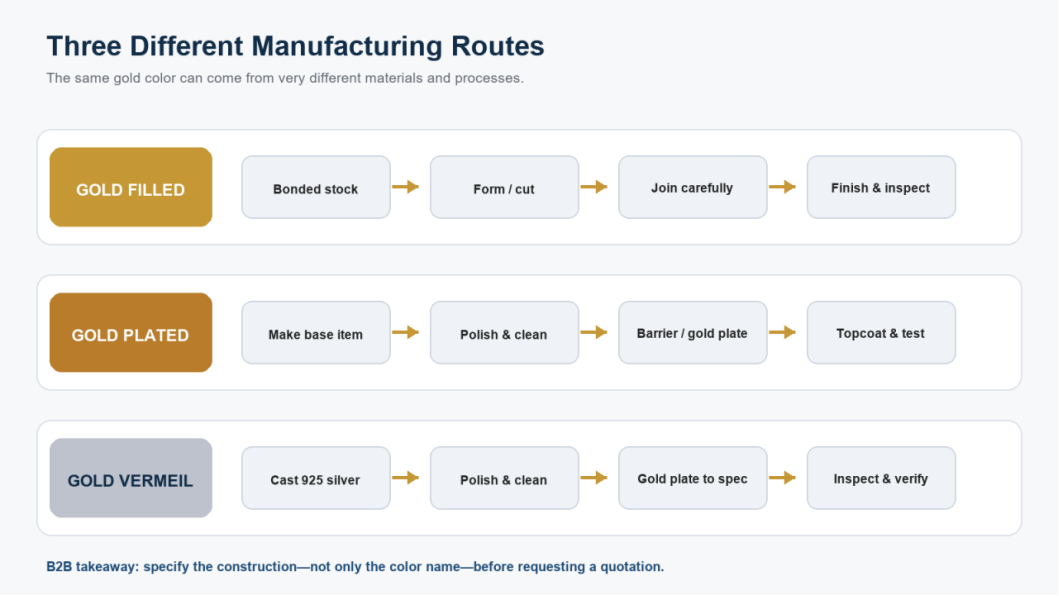
How Material Choice Affects Cost and MOQ
Factory Price Jewelry is calculated from the complete specification. Important cost drivers include:
· Metal type, weight, and market price
· Stone type, quantity, and setting method
· Mold, CAD, sampling, and development costs
· Plating or bonded-material specification
· Polishing and surface-quality standard
· Testing, inspection, packaging, and labeling
· Order quantity, size assortment, and color assortment
· Delivery terms and production schedule
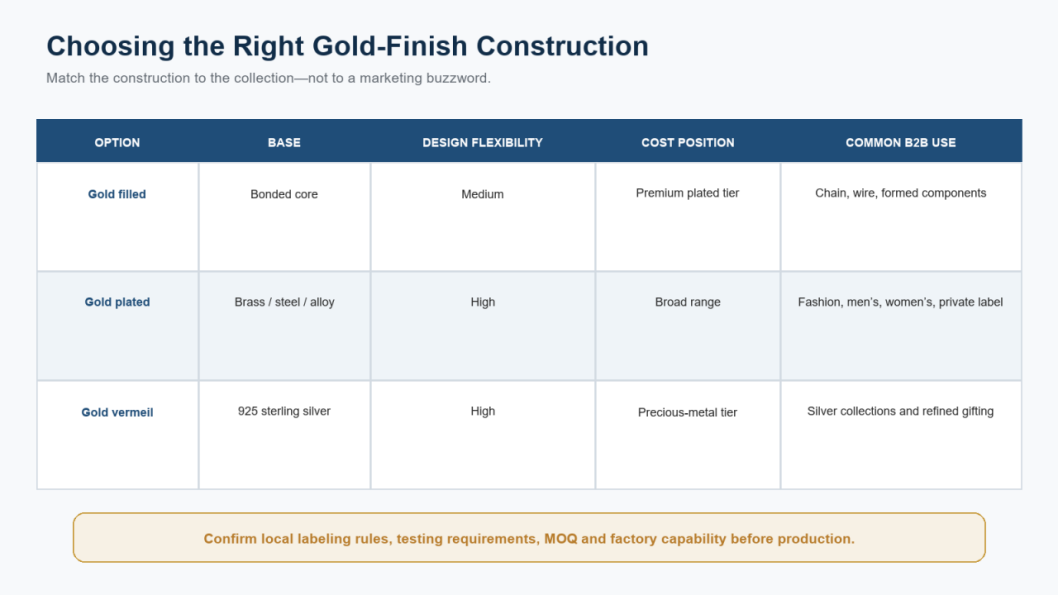
Gold plated brass is often the most flexible option for fashion collections and can support a broad Jewelry Catalog Price List. Gold vermeil normally costs more because the base is 925 silver and the gold layer must meet the agreed specification. Gold filled products may have higher material and component costs, with different MOQ constraints based on available sheet, wire, chain, tubing, and findings.
When reading Factory Price Jewelry Reviews or comparing Low Priced Jewelry, make sure the quotes describe the same product. The misspelled search phrase Factory Frice Jewelry usually reflects a buyer seeking lower cost, but the lowest price is not useful if the supplier changes the base metal, reduces plating, skips testing, or delivers inconsistent color.
A Factory Direct Jewelry quotation should identify assumptions and exclusions. Professional Jewelry Suppliers do not hide major quality differences behind a single unit price.
Choosing a Vietnam or Chinese Jewelry Factory
A Chinese Jewelry Factory can offer a mature development ecosystem, rapid access to molds, stones, findings, packaging, and specialized finishing. Guangzhou Jewelry manufacturing resources are particularly useful for sampling and detailed product engineering.
A Vietnam Jewelry Factory can support scalable production and supply chain diversification. Buyers increasingly search for a Vietnam manufacturer or Vietnam Jewelry partner as part of a global sourcing strategy. The best choice depends on material, design, capacity, quality system, delivery plan, and communication—not country name alone.
JINYI connects its Panyu, Guangzhou headquarters with large factories in Thanh Hoa, Vietnam. This allows global buyers to discuss development, Brass Jewelry, 925 Sterling Silver Jewelry, Stainless Steel Jewelry, alloy categories, and special K-gold orders through one experienced supplier structure.
When comparing Vietnam Jewelry manufacturers, Chinese Jewelry Manufacturers, Jewelry Vendors, or a body jewelry factory, ask:
1. Does the factory specialize in the required metal and coating system?
2. Can it explain the difference between gold filled, gold plated, vermeil, and solid gold?
3. Does it provide OEM Jewelry and ODM Jewelry development?
4. Who owns the CAD file, mold, and Custom Jewelry design?
5. How does it control approved samples during Jewelry Production?
6. Can it provide material declarations and relevant test reports?
7. How are plating thickness, color, adhesion, and corrosion controlled?
8. Can it support Personalized Jewelry Manufacturers requirements such as names, initials, dates, coordinates, or birthstones?
9. Are alloy, silver, brass, steel, and gold products managed in suitable production units?
10. Can the supplier support repeat orders with consistent specifications?
A dependable Jewelry Supplier should identify technical risks before taking the order.
Quality Control Checklist for Gold-Finish Jewelry
Before approving bulk production, establish a signed master sample and product specification. Quality checkpoints may include incoming metal inspection, casting or forming, soldering, stone setting, polishing, cleaning, plating, coating, assembly, and final packing.
Inspect:
· Dimensions, weight, and ring size
· Surface scratches, porosity, dents, and sharp edges
· Stone color, alignment, and security
· Solder points, clasps, hinges, and moving components
· Gold tone and consistency between production lots
· Plating coverage in recessed and high-wear areas
· Thickness or coating evidence when specified
· Engraving, logo, and personalization accuracy
· Pairing consistency for earrings
· Packaging, labels, barcodes, and carton markings
The test plan should match the material and intended use. Hypoallergenic Jewelry claims, nickel-free claims, lead and cadmium limits, and coating claims may be regulated differently across markets. Confirm applicable requirements before production.
Using Consumer Search Trends Without Copying Competitors
Jewelry businesses often study retail searches such as Fine Jewellery, Buy Jewelry, Online Jewelry, Online Jewelry Stores, Jewellery Near Me, and Wholesale Jewelry Near Me. These phrases can reveal customer intent but should not be forced into product copy that targets wholesale buyers.
Trend terms such as Ladybird Gold Jewelry, Ladybird Rings, Gold Nugget Rings, Gold Heart Ring, Sterling Silver Charm Bracelets, or Best Jewelry for Everyday may inspire original category planning. Searches for Pandora Jewelry Mens Rings or Pandora Mens Rings may indicate demand for accessible men’s ring styles, but a Custom Jewelry Manufacturer should create original products and avoid copying protected trademarks, logos, or distinctive designs.
The same principle applies to personalized jewelry manufacturers, a Personalized Jewelry Factory, Fashion Jewelry Manufacturers, an Alloy Jewelry Manufacturer, or an Alloy Jewelry Factory. Search data should guide material, silhouette, function, price, and customer needs—not encourage imitation.
Why Work with JINYI Jewelry (www.jyjew.com)?
JINYI Jewelry (www.jyjew.com) supports brands, importers, Jewelry wholesalers, and B2B Jewelry buyers that need technical development and diversified production. Its capabilities include medium- to high-quality Brass Jewelry, 925 Sterling Silver Jewelry, premium Stainless Steel Jewelry, zinc, alloy products, and K-gold jewelry for special orders.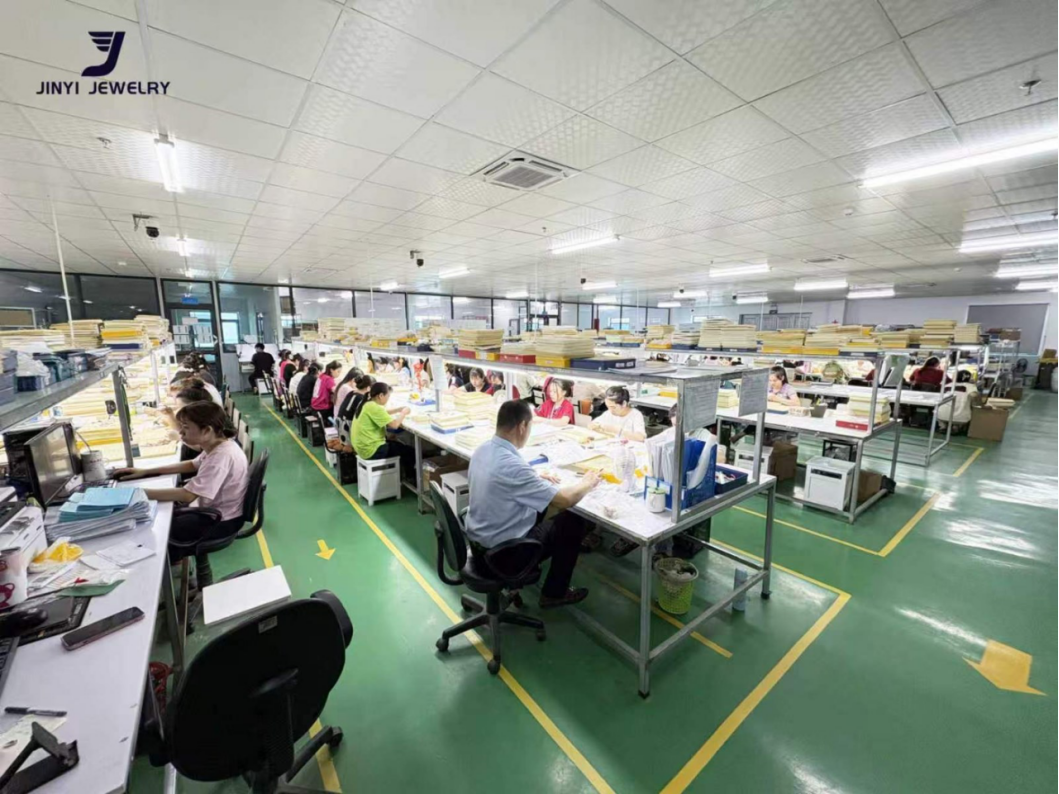
Whether a project requires a Brass Jewelry Manufacturer, 925 Silver Jewelry Manufacturer, Alloy Jewelry Manufacturer, Chinese Jewelry Factory, Vietnam Jewelry Factory, or Gold Jewelry Manufacturers for a special program, JINYI can review the design and recommend a suitable production route.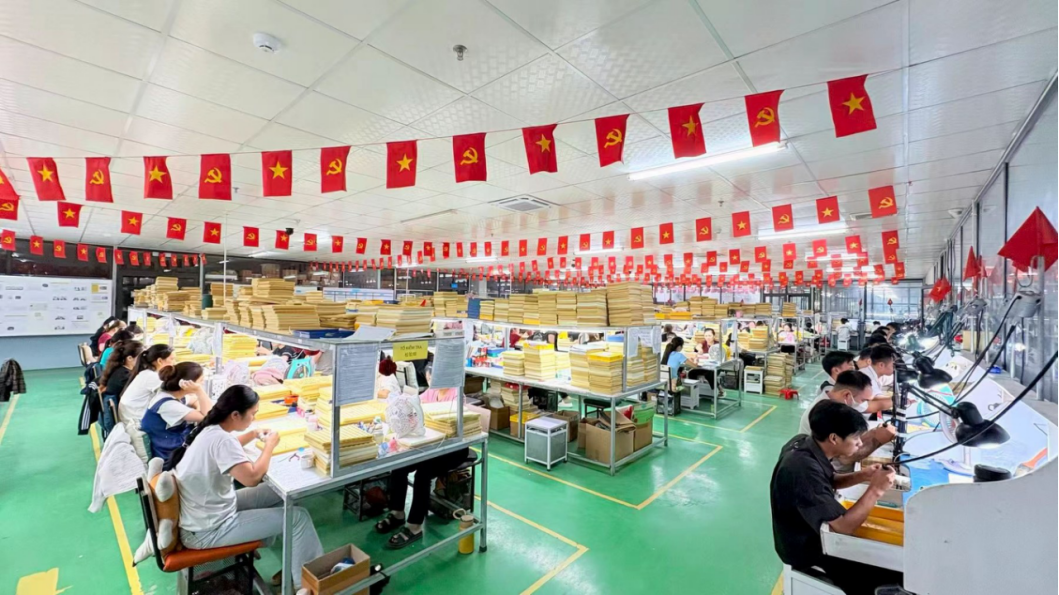
The company supports OEM Jewelry, ODM Jewelry, Custom Jewelry Manufacturer services, and selected personalized programs. Buyers receive a more accurate response when they provide design files, dimensions, material requirements, target gold color, plating specification, order quantity, testing needs, packaging, destination market, target price, and delivery date.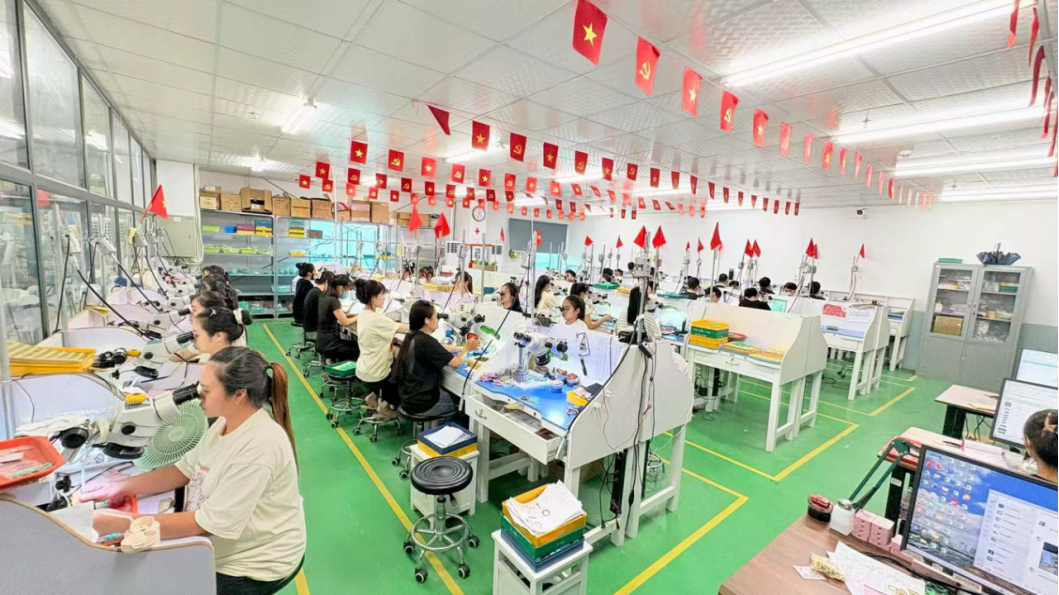
Start Your Gold-Finish Jewelry Project
Gold filled, gold plated, and gold vermeil products serve different customers and price positions. The correct decision begins with an honest product description, a technically suitable design, a complete specification, and a Jewelry Factory that can maintain quality from the approved sample through repeat production.
If you are building a Jewelry Business, developing a new Jewelry Brand, sourcing Jewelry Wholesale collections, or evaluating Factory Direct Jewelry Suppliers in China and Vietnam, contact JINYI Jewelry (www.jyjew.com). Share your drawings, reference samples, material, coating, quantity, target price, testing requirements, and delivery schedule to receive a project review and quotation.
Suggested FAQ for the Web Page
Is gold filled jewelry the same as gold plated jewelry?
No. Gold filled material uses a relatively thick gold-alloy layer mechanically bonded to a core, while gold plated jewelry receives a thinner deposited coating. Their production methods, material costs, design limitations, and labeling requirements differ.
Is gold vermeil better than gold plated brass?
Gold vermeil has a sterling silver base and can support a precious-metal market position. Gold plated brass can offer greater price flexibility and broad design options. The better choice depends on the customer, target price, design, coating specification, and destination market.
Can gold plated jewelry be suitable for everyday wear?
It can be designed for regular wear, but performance depends on the base metal, preparation, plating system, thickness, topcoat, product shape, and customer care. Buyers should define measurable tests instead of relying on a general durability promise.
Does JINYI manufacture gold filled jewelry?
JINYI’s stated core capabilities include brass, 925 silver, stainless steel, zinc, alloy, and special-order K-gold jewelry. Gold-filled projects require a technical feasibility review because bonded gold-filled material is different from conventional plating.
What information is needed for a factory quotation?
Provide design files or reference images, dimensions, base metal, stones, gold color and karat, coating or bonded-material specification, quantity, size range, testing, packaging, destination market, target price, and delivery date.