A supplier can call a piece 3D hard gold, 5D hard gold, 5G gold, ancient-style gold, or flash-finish gold and still leave you without the one answer that matters: what exactly will be delivered in bulk? For a jewelry brand, the safest rule is simple. Treat a craft name as a design and production brief, not as a purity grade. Ask what metal specification, construction method, wall thickness, surface treatment, and acceptance standard sit behind the label.
A craft name can sell the look, but it cannot replace a production specification.
This distinction matters because gold jewelry is bought for more than one reason. Some customers want metal value; others want a lightweight statement piece, a heritage finish, or a detailed giftable design. Your collection can serve all of those needs, but the quote, sample, packaging, and after-sales policy must match the construction. The following guide turns familiar retail terms into sourcing questions a B2B buyer can actually use.
Start with the two questions that prevent expensive confusion
First, does the stated gold content meet the market and product claim you plan to make? A production process may change shape, hardness, surface character, or visual size. It does not automatically tell a buyer the fineness of the metal. Gold content should be specified separately on the technical sheet, together with any alloying, stamping, labeling, and assay requirements relevant to the destination market.
Second, is the customer paying for metal, design labor, or both? A polished high-gold-weight bangle and a large hollow electroformed charm can look equally premium from a distance, yet they carry different cost structures and repair risks. When resale or exchange value is central to the product promise, explain that a buyer may assess the recoverable precious-metal content differently from the original workmanship charge. Do not let a sales story imply that a high craft fee will be recovered as gold value.
How the major gold jewelry craft families compare
Craft family | What the customer sees | Production limitation | What to ask the supplier |
Heritage or ancient-style finish | Soft matte surface and quiet, hand-finished character. | The matte face can burnish brighter through wear; labor and texture consistency vary. | Approve a texture panel and define acceptable shine change. |
Filigree or wirework | Openwork, fine wire detail, and an artisanal look. | Delicate joins and thin sections need careful handling and repair planning. | Ask for join locations, cleaning guidance, and a repair route. |
Enamel or colored finish | Color contrast and a stronger design story. | The colored layer can chip or crack if impact resistance is not designed and tested. | Confirm material, adhesion test, edge protection, and color reference. |
Hollow hard-gold construction | Large visual volume at lower weight; playful sculptural forms. | A hollow wall can dent, collapse, or be difficult to restore after impact. | Request wall-thickness range, weight tolerance, and drop or compression criteria. |
Polish, brush, or engraved texture | Mirror shine, satin softness, or high-relief pattern. | Polish shows scratches; fine textures can trap residue; deformation can disrupt patterns. | Approve gloss level, texture direction, and a post-wear sample standard. |
Heritage texture and filigree are design-led choices
Ancient-style or heritage-inspired gold finishes usually rely on a low-gloss, softly textured surface. They work well when a brand wants warmth, visual depth, and less obvious fingerprinting than a mirror-polished piece. The trade-off is that buyers should approve the finish by reference sample, not by a phrase in a quotation. A matte surface can gradually brighten where it rubs against skin, other jewelry, or a clasp. That is normal wear, but it should not become a surprise after launch.
Filigree is a different decision. Its appeal comes from fine wire, open spaces, and craftsmanship that reads as decorative from a distance and intricate up close. That also makes it less forgiving in shipping, resizing, and repair. Specify whether the item is intended for occasional wear or daily wear, and identify vulnerable points such as loops, solder joints, and protruding wire ends. A beautiful sample with weak joins is not a bulk-ready design.
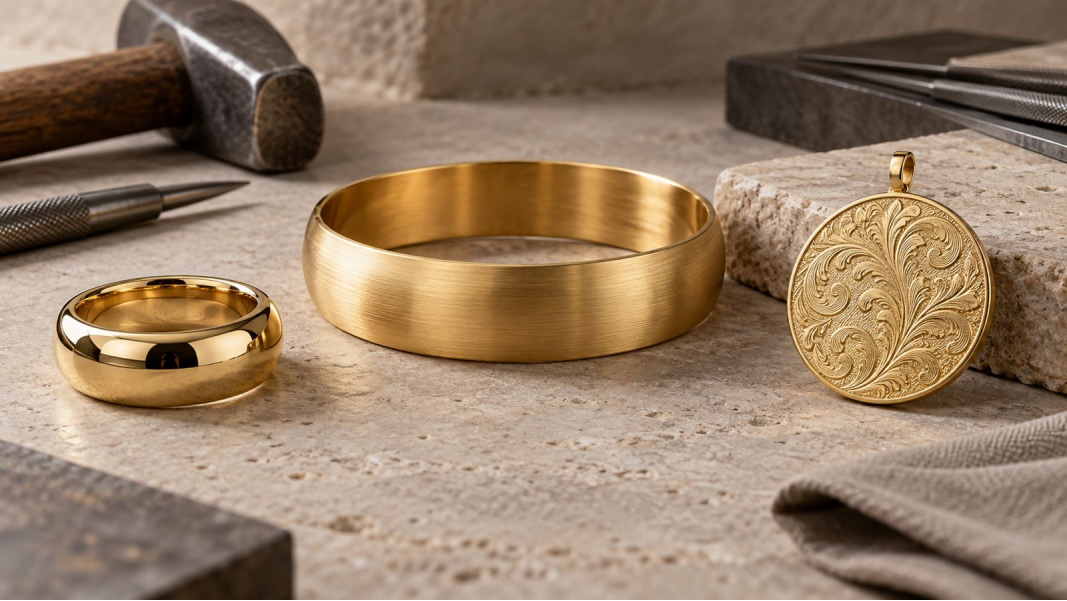
Different surface treatments change visual character and maintenance expectations; they do not, by themselves, state gold content.
Hard gold labels need a technical sheet
Terms such as 3D hard gold, 5D hard gold, 5G gold, and similar names are widely used in market communication, but they are not interchangeable universal specifications. Different producers may use them to describe combinations of lightweight construction, alloy strategy, electroforming, geometry, or surface effects. Their commercial purpose is understandable: they signal a larger-looking, harder-wearing, more sculptural piece than conventional soft high-gold jewelry. But a buyer should not assume identical performance from the name alone.
The key question is construction. A hollow pendant can look generous at a lower weight, which is attractive for entry price points and charm programs. It can also be more vulnerable to severe impact than a solid item. If a factory describes a piece as more resistant to bending, scratching, or breaking, turn that claim into a measurable approval point. Ask for the nominal wall-thickness range, finished weight tolerance, clasp or loop pull requirement, and the specific test or comparison used. Keep the signed approval sample for repeat orders.
JINYI Jewelry (www.jyjew.com) supports custom development, sampling, production management, and quality-control coordination across multiple jewelry material programs. For a gold-craft brief, that process is most useful when the buyer supplies a target price, product use case, finish reference, and durability expectation before the sample is made. The supplier can then explain which construction route is realistic instead of forcing a design into the wrong weight or wall thickness.

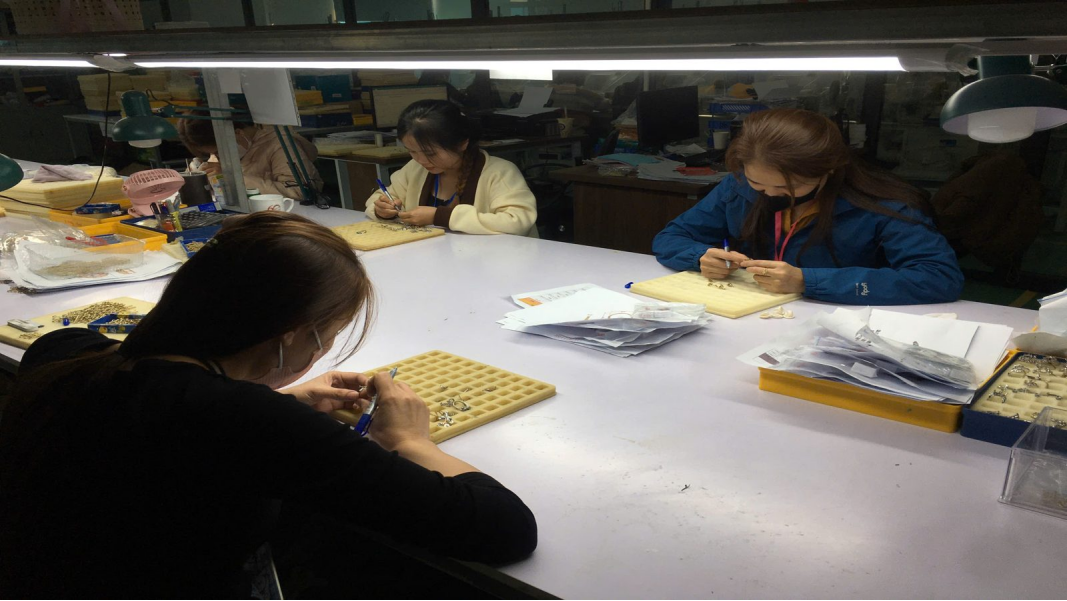
JINYI Jewelry workshop context. This image illustrates the working environment only and does represent capacity or output.
Surface finishing is where the customer experience becomes visible
Polishing creates the bright mirror effect many customers associate with new gold jewelry. It also makes hairline scratches more visible. Brushed or satin finishing diffuses reflections and often hides light wear better, while machine-cut or engraved patterns add depth and movement. Each route needs an agreed visual standard: a photo alone is rarely enough because gloss, texture direction, and pattern crispness change under different lighting.
Colored gold effects and enamel-like decorative layers need an extra level of caution. Confirm whether color comes from a surface treatment, a coating, an enamel process, or an optical finish, then verify edge coverage and impact sensitivity. A color panel should be part of the pre-production approval. If a component changes after sampling, re-check the color and surface route, because edges, soldered areas, and relief details are where finish variation often appears first.
Build a bulk order around the failure points
The most useful quotation is not simply a unit price. It should clarify the cost drivers that change the finished result: metal content or weight basis, mold or tooling where applicable, sample charges, labor for the selected finish, stones or non-metal components, packaging, testing, and freight. A low unit price can become misleading if the quote excludes a revised mold, branded box, or repeat-order sample control.
A common sourcing failure is approving a visually attractive prototype without documenting what made it attractive. The next batch then arrives with a slightly different gloss, lighter texture, altered hollow feel, or changed attachment point. Prevent this by saving an approved master sample, annotated photos under agreed lighting, a weight tolerance, and a defect list. For hollow or fine-detail pieces, include a practical handling test that reflects how the product will be packed, shipped, and worn.
· State the gold-content claim and any required hallmarks separately from the craft name.
· Approve a physical texture, gloss, or color reference rather than relying on a product-rendering alone.
· Record wall thickness, finished weight tolerance, attachment strength, and vulnerable edges for lightweight pieces.
· Quote packaging, testing, re-sampling, and replacement components before bulk approval.
· Keep the approved sample and inspection notes linked to every repeat purchase order.
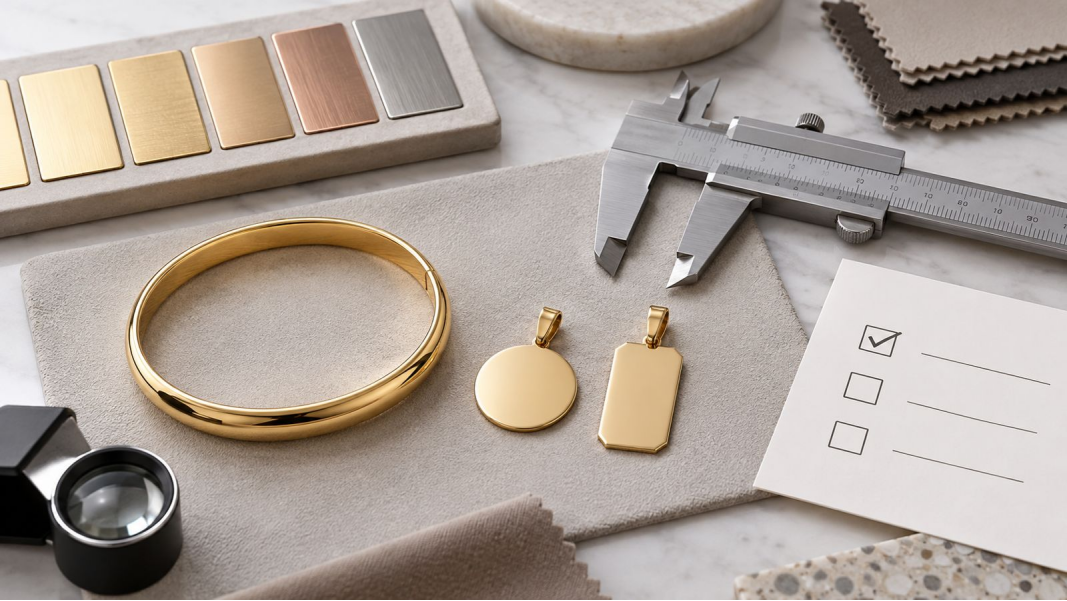
A repeat-order control file should preserve the approved sample, weight tolerance, surface reference, and any agreed handling checks.
Frequently asked questions
Does a special gold craft make the gold purer ?
No. A craft label may describe appearance, construction, or surface treatment. Gold content must be specified separately in the product specification and verified to the standard required for the market where the item is sold.
Is hard gold always better for a jewelry brand ?
Not always. It can be a strong choice for lightweight, high-volume designs, but the construction may be hollow and the repair route may differ from a solid piece. Match the product to the customer, price point, and expected wear conditions.
Which finish is easiest to maintain ?
There is no universal winner. Mirror polish highlights scratches, while brushed or textured finishes may disguise light wear but need specific cleaning guidance. Choose the finish that supports the intended design language and tell customers what normal wear looks like.
Turn the craft story into a production-ready brief ?
Gold craftsmanship gives a collection its personality, but the commercial result comes from disciplined specification. Decide whether the product is selling precious-metal weight, visual scale, heritage texture, color, or engineering-led lightness. Then make the supplier confirm the construction, finish reference, tolerances, and test points that support that promise.
When a brand is ready to develop a gold jewelry concept, JINYI Jewelry can review the design brief through sampling and production coordination. Start with one question: what must the customer still love after the first month of wear? The answer will guide the craft route more reliably than any trend label.